
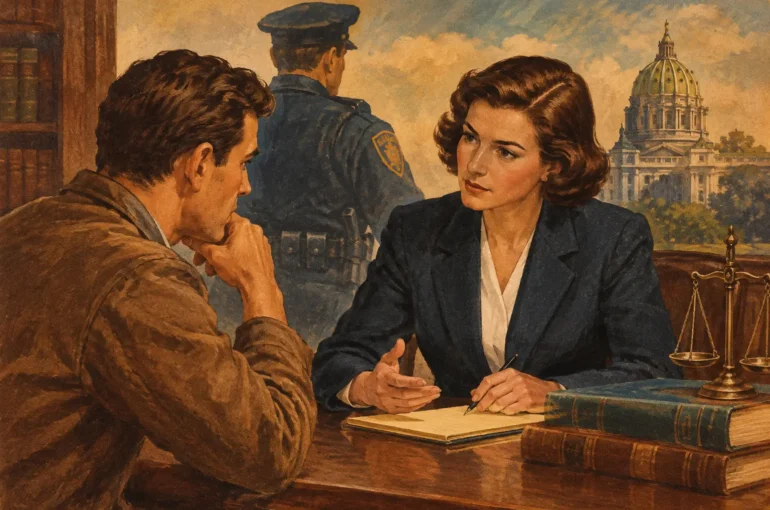
When to Call a Police Misconduct Lawyer in Pennsylvania
A police encounter can leave more than physical injuries. It can leave someone facing criminal charges, missing work, afraid to report what happened, or unsure whether an officer crossed a legal line. A police misconduct lawyer Pennsylvania residents consult can assess the facts promptly, preserve critical evidence, and explain whether a civil-rights claim, criminal-defense strategy, or both may be appropriate.
Not every difficult or upsetting encounter with law enforcement is misconduct. Officers may make arrests, use force in limited circumstances, and conduct certain searches when the law permits it. The central question is whether the officer’s conduct was reasonable and lawful under the specific facts – not whether it felt fair in the moment. That distinction is why early, practical legal advice matters.
What Can Police Misconduct Look Like?
Police misconduct is a broad term for conduct by an officer or law-enforcement agency that violates a person’s constitutional rights or other legal protections. The facts, available evidence, and reason for the police contact all matter. A claim that appears straightforward at first can become complicated when body-camera footage, dispatch records, witness accounts, or criminal court filings tell different parts of the story.
Common concerns include excessive force during an arrest or detention, an unlawful stop or search, an arrest made without probable cause, false statements in reports, retaliation for protected speech, denial of needed medical care while in custody, or discriminatory treatment. An improper seizure of property may also raise serious questions.
The legal standard changes with the situation. Force used during an arrest is often evaluated under an objective reasonableness standard. A jail medical-care claim may involve different constitutional rules. A search of a home, vehicle, or phone can raise separate issues about warrants, consent, and recognized exceptions to the warrant requirement. A careful attorney does not force every police encounter into one category.
A Police Misconduct Lawyer in Pennsylvania Starts With the Record
Memories fade quickly, while recordings and official records can be overwritten, lost, or become harder to obtain. If you believe misconduct occurred, document what you can as soon as you are safely able to do so. Write down the date, time, location, names or badge numbers, vehicle numbers, words used, injuries, witnesses, and whether cameras may have captured the encounter.
Photograph visible injuries and damaged property. Seek medical treatment when needed, both for your health and to create an accurate medical record. Keep copies of hospital paperwork, prescriptions, repair estimates, work-loss information, court notices, and communications from police or insurance companies. Do not edit photos or recordings, and save original files when possible.
Potential evidence may include body-worn camera footage, dashboard video, 911 calls, radio transmissions, surveillance video from homes or businesses, jail records, booking paperwork, and internal police reports. A lawyer can determine what may be available and how to seek its preservation. Waiting can make a meaningful difference, especially where video retention periods are short.
Be cautious about public posts. A social-media post made while angry or frightened can be taken out of context and used to challenge credibility later. It is usually wiser to preserve information privately and discuss the facts with counsel before making broad public accusations.
Civil Claims and Criminal Charges Can Move on Separate Tracks
A person can be harmed by police conduct and still face a criminal case. These matters overlap, but they are not the same. A prosecutor may pursue charges based on the underlying incident, while the person charged may have defenses involving an illegal stop, search, interrogation, or arrest. The outcome of one matter can affect the other, which makes coordinated strategy essential.
For example, a person accused of resisting arrest may also allege unnecessary force. The evidence must be evaluated carefully. Statements made in a civil complaint, a disciplinary complaint, or online can be relevant in the criminal case. At the same time, waiting without legal guidance can jeopardize evidence needed to challenge the government’s version of events.
A criminal-defense attorney can address immediate court dates, bail conditions, and suppression issues. A civil-rights attorney can evaluate possible damages and claims against individual officers or public entities. In some cases, one legal team can help coordinate the approach so that protecting the client’s liberty does not undermine a potential civil claim.
Deadlines and Government Immunity Require Prompt Attention
Many police-misconduct cases are brought under federal civil-rights law, often Section 1983, when a government official allegedly violates constitutional rights. Pennsylvania also has state-law claims that may be relevant, depending on the conduct and the parties involved.
Deadlines are not something to guess about. Federal civil-rights claims in Pennsylvania often use a two-year limitations period, but determining when the clock starts can be more complicated than simply counting from the date of an encounter. State-law claims can have different rules. Claims involving public entities may also raise notice, immunity, and procedural issues.
Pennsylvania’s governmental-immunity rules can limit claims against municipalities and other local agencies. Individual officers and government entities may have different defenses, and the answer may depend on whether the alleged conduct was negligent, intentional, within the scope of employment, or protected by qualified immunity. These are fact-specific issues, not technicalities to leave until the last minute.
An internal complaint can be worthwhile, particularly if you seek an investigation or policy change. But filing one does not automatically preserve a lawsuit, stop a limitations period, or secure all relevant evidence. It should be considered as part of an overall strategy, not treated as a substitute for legal advice.
What Damages Might Be Available?
A successful claim may seek compensation for medical expenses, lost income, property damage, pain and suffering, emotional distress, and other losses connected to unlawful conduct. In appropriate cases, a court may consider punitive damages against an individual defendant. Injunctive relief may also be relevant when a person seeks changes to ongoing practices.
No responsible lawyer should promise a result or assign a value before investigating. Damages depend on the severity of the harm, medical proof, lost wages, video and witness evidence, the legal claims available, insurance or indemnification questions, and the defenses raised. A brief detention with no physical injury may still involve an important rights issue, but it may call for a different legal approach than a case involving serious injury or a wrongful prosecution.
Questions to Bring to a Consultation
A productive consultation begins with a clear timeline and the documents you already have. Bring charging documents if you were arrested, photographs, medical records, names of witnesses, video files, and any correspondence with the department or prosecutor. Be prepared to explain what happened before police arrived, what officers said, whether you were told you were free to leave, and what occurred after the encounter.
You should also ask direct questions: What claims may be available? Are criminal charges pending? What evidence needs immediate preservation? What deadlines apply? Who could be named in a claim? How will fees and case costs work? Clear answers help you make decisions based on the realities of your case rather than assumptions.
For individuals and families in Philadelphia and throughout Southeastern Pennsylvania, Donoghue Legal Group approaches high-stakes disputes with personal attention, practical guidance, and forceful advocacy. The goal is to understand what happened, protect the client’s immediate interests, and take efficient action supported by the facts.
If an encounter with police has left you injured, charged, or uncertain about your rights, preserve what you can and get advice before key evidence or legal options disappear. Prompt action does not require rushing to judgment. It gives you the best chance to understand the facts and choose a path forward with confidence.